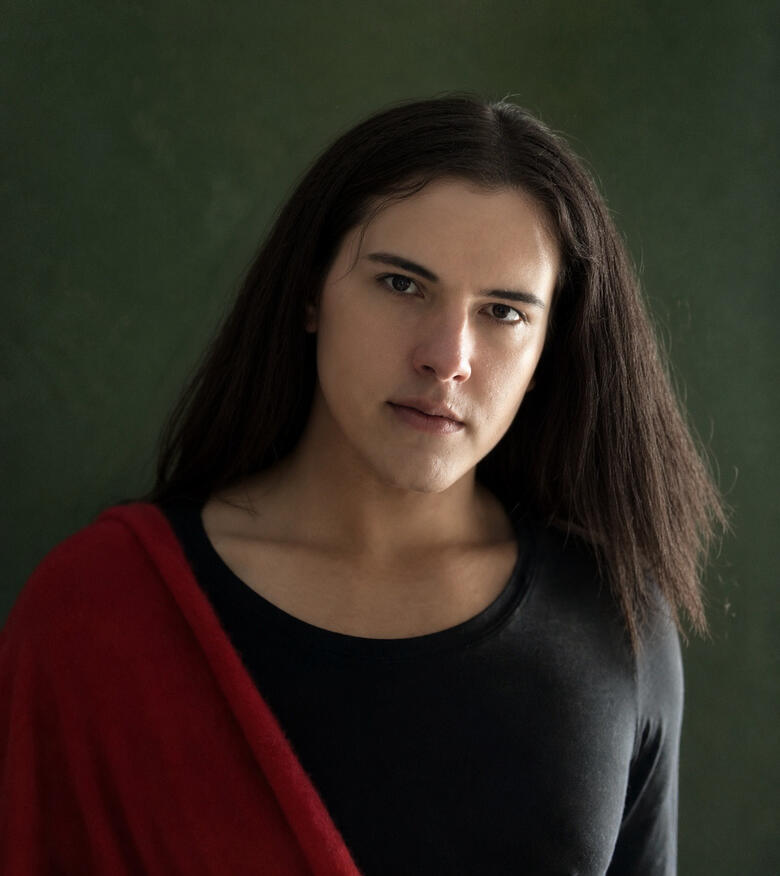
Noah Chelednik
Princeps of Chedai
&
Inventor of The Loomer
I am but a simple printer. My press is called the Loomer, and I built it. It takes the ancient languages and sets them into English twice over: once close enough that a reader can see what the original is actually doing, even when the writer does it unskillfully, and once in good, clear, plain English. Both run under one editorial standard, so the same word is handled the same way in Aristotelēs as in Paulos, and in Kaisar as in Kikero.Here is the curiosity of the thing. The press yields two products in a single pass, and that doubleness is the entire design of the company. To a reader it yields books, audiobooks, and the scholarship built in rather than bolted on.To the makers of thinking machines it yields the ledger. Most translation cuts the thread: you read the English, and you cannot get back to what stood underneath it. Here nothing is cut. Every English word keeps the ancient word it came from, the exact form that word was written in, the dictionary entry it belongs under, and the page and line where it sits. Whether Chedai looks like a publisher or a training-data company depends entirely on where you stand when you look at it; it is one press.The ledger is what I aim to sell. The books are what the selling pays for, and the books must be free, for everyone, everywhere, forever. Call it a strange economy if you like. I call it a sound one, since knowledge is the only stock that is not diminished by the spending.Correction is the part that compounds, and the part we will all have to work on together. Let a true scholar rule on a single word, and that ruling runs backward through every record already made and
forward into every record to come. Expert judgment is not spent but banked, and it draws interest indefinitely. Past that, the press is held back by the cost of compute and by nothing else.Aldus of Venice printed 134 editions in twenty years. Thirty of them were the first time a Greek author had been put into type at all, and out of those thirty Europe recovered its own antiquity. That was one literature moving one road, east to west. Now let the traffic run every way at once, west to east and north to south as freely.The whole of the surviving premodern literature, 115 candidate languages carried into 26 modern ones, in books and audiobooks that are beautiful and cost nothing to reach. It will take decades and require many hands.It can be begun now, and so I have begun it.-N. Chelednik, Printer[email protected]
[email protected]